
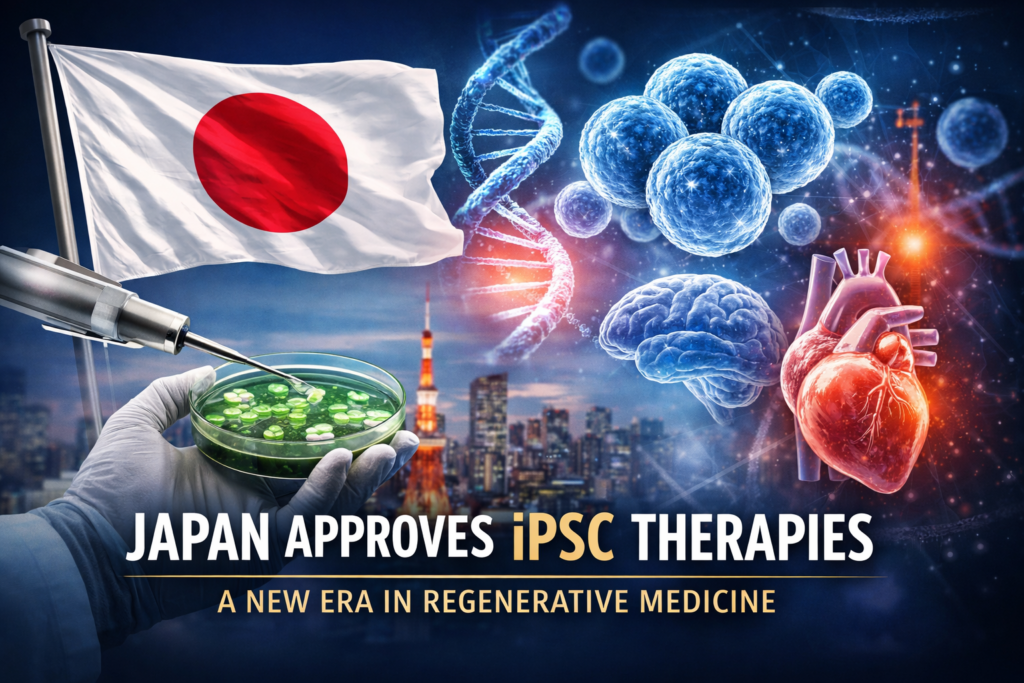
The Future of Cell-Based Healing Has Officially Begun
In a historic milestone for medicine, Japan has become the first country in the world to approve therapies derived from induced pluripotent stem cells (iPSCs)—marking a major step forward in regenerative medicine.
This development signals a shift from experimental science to real-world clinical application, bringing us closer to treating diseases at their root cause.
🔬 What Are iPSCs?
Induced pluripotent stem cells (iPSCs) are created by reprogramming adult cells (like skin or blood cells) back into a stem cell-like state.
These cells can then:
- Transform into almost any cell type
- Repair damaged tissues
- Replace diseased or aging cells
👉 Unlike traditional stem cells, iPSCs avoid ethical issues and can be more personalized
🚀 What Did Japan Approve?
In 2026, Japan’s health ministry granted approval for two groundbreaking iPSC-based therapies:
❤️ 1. Heart Failure Treatment (ReHeart)
- Uses lab-grown heart muscle cells
- Helps repair damaged heart tissue
- Designed for severe heart failure patients
🧠 2. Parkinson’s Disease Treatment
- Uses dopamine-producing nerve cells
- Replaces damaged brain cells
- Aims to improve movement and neurological function
👉 These are the first commercially approved iPSC therapies in the world
🌍 Why This Is a Big Deal
This approval represents a major turning point:
🔹 From Research → Real Treatment
For years, stem cell therapy has been promising—but mostly experimental.
Now, it is becoming actual medicine used in patients.
🔹 Treating the Root Cause
Instead of managing symptoms:
- Replace damaged cells
- Restore normal function
👉 This is true regenerative medicine
🔹 Global Leadership by Japan
Japan has pioneered a fast-track approval system for regenerative therapies, allowing earlier access while continuing to monitor safety and effectiveness
⚠️ Important: Conditional Approval
These therapies are approved under a “conditional and time-limited” system, meaning:
- They can be used clinically
- But ongoing studies are required
- Long-term safety and effectiveness are still being monitored
👉 This allows innovation while maintaining safety
🧠 What This Means for the Future
This breakthrough opens the door to treating:
- Neurodegenerative diseases (Parkinson’s, Alzheimer’s)
- Heart disease
- Spinal cord injuries
- Diabetes
- Organ failure
👉 iPSC therapy may eventually allow personalized regenerative treatments using your own cells
🏥 Relevance to Modern Clinics
For advanced clinics like The Royal British:
This confirms that:
- Regenerative medicine is no longer theoretical
- The future is shifting toward:
- Stem cells
- Cell signaling (exosomes, peptides)
- Personalized protocols
👉 Positioning your clinic in this space is forward-thinking and globally aligned
🌟 The Beginning of a New Era
More than 20 years after the discovery of iPSCs, we are now seeing their first real clinical applications.
Experts emphasize that:
This is not the end goal—but the beginning of a new era in medicine
🏁 Bottom Line
Japan’s approval of iPSC therapies marks:
👉 The transition from “possible” to “practical” regenerative medicine
The future of healthcare is moving toward:
- Repair instead of replacement
- Regeneration instead of suppression
- Personalization instead of standardization
📍 The Future Starts Now
As regenerative medicine continues to evolve, staying informed—and ahead—is key.
At The Royal British, we remain committed to bringing cutting-edge, science-driven therapies to our patients.
Leave a Reply